
Transforming urban spaces into ultra-dense, biodiverse woodland anchors through community-led planting and long-term environmental monitoring.
Background

A Tiny-Forest (Miyawaki method) is an ultra-dense, native planting designed to accelerate natural forest succession. In as little as 20 years, a plot the size of a tennis court can mature into a multi-layered woodland ecosystem.
- Biodiversity Anchors: Tiny-Forests create concentrated habitat corridors that support birds, pollinators, amphibians, and soil organisms in urban and suburban landscapes.
- Climate Resilience: Dense canopy cover reduces urban heat-island effects, manages stormwater, sequesters carbon, and improves local air quality.
- Learning Laboratories: Each Tiny-Forest becomes a permanent outdoor classroom for ecological monitoring, citizen science, and intergenerational learning.
Espace Canopee LocaLeaf Approach
Our Tiny-Forest Legacy Program is a multi-phase school and community initiative that takes participants from classroom science to large-scale ecological installation. The program combines curriculum-aligned education with real-world reforestation, giving students and community members lasting ownership of a living legacy.
Phase I: The Design & Blueprint Lab (Classroom)
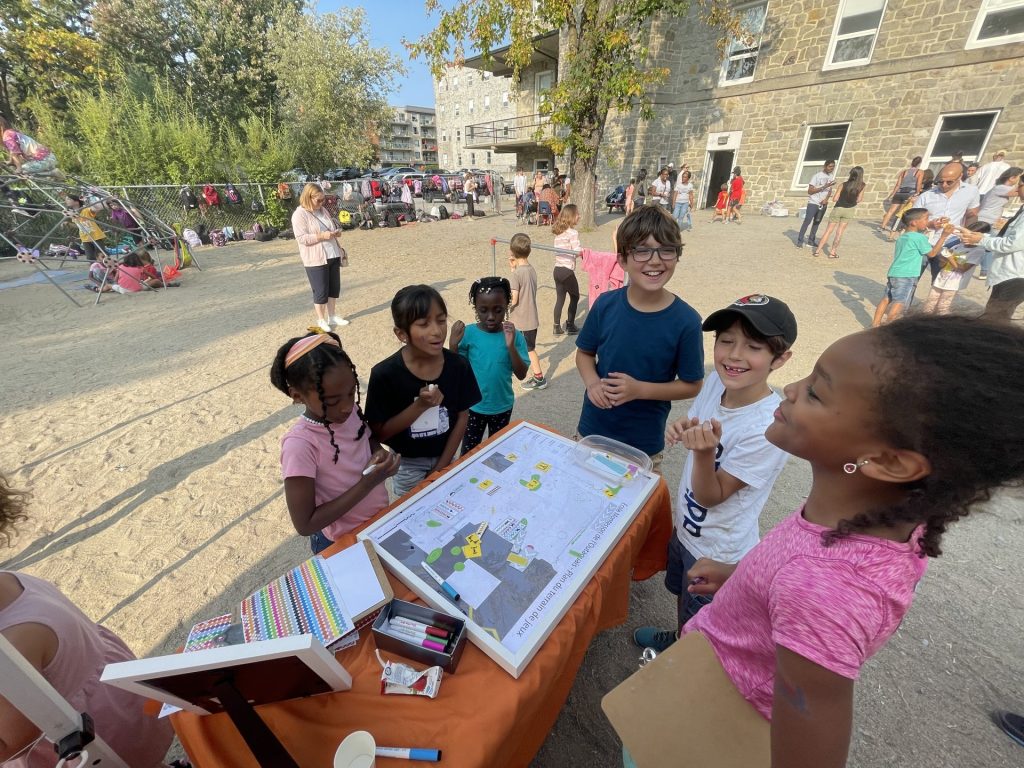
- Forest Architecture: Students learn the four layers of a forest (canopy, understory, shrub, ground cover) and select native species for each layer based on local ecology.
- Soil Science: Hands-on soil testing and amendment planning—understanding pH, organic matter, and the role of mycorrhizal fungi in forest establishment.
- Creature Connections: Mapping the wildlife that the Tiny-Forest will support—from nesting birds to overwintering insects—and designing habitat features accordingly.
- Deliverable: Each class produces a Tiny-Forest Blueprint: a scaled planting plan, species list, and projected growth timeline ready for Phase II.

Phase II: The Installation & Active Lab (Field)
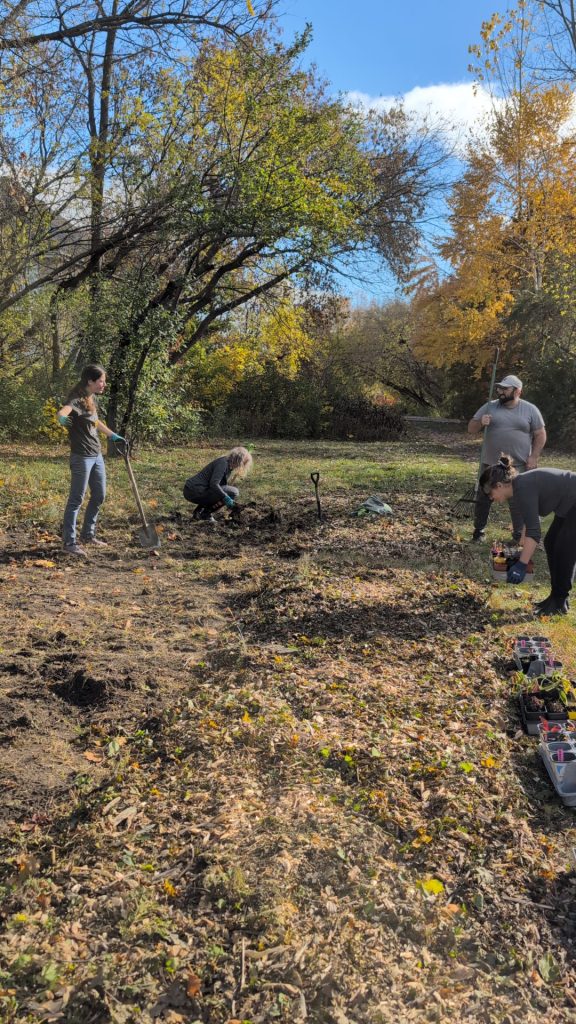
- Site Preparation: Students and volunteers prepare the planting site—amending soil, installing temporary fencing, and laying mulch pathways.
- Safety & Observation Zone: A designated safe perimeter is established for younger participants, with observation stations for journaling and sketching.
- Installation: Dense planting at Miyawaki spacing (3 trees per square meter) using native saplings sourced from the Jardins LocaLeaf Learning Laboratory.
- The Outcome: A completed Tiny-Forest installation with interpretive signage, a maintenance calendar, and a student-led monitoring protocol.
Community & Lab Integration
- Mobilization: Each Tiny-Forest project engages families, local businesses, and municipal partners—building broad community investment in the site’s long-term success.
- The Learning Lab Advantage: All plant stock is propagated at the Jardins LocaLeaf nursery, ensuring genetic suitability to regional soil and climate conditions while supporting the social-enterprise model.
- Aylmer Pride: Completed forests are registered on the community map, celebrated with a public unveiling event, and become permanent landmarks of neighbourhood ecological stewardship.